DART Imaging is an emerging world leader in R&D, manufacturing, sales and service of DBT (Digital Breast Tomosynthesis) mammography systems, which has been proved to be the one and only best approach for early detection of breast cancer.
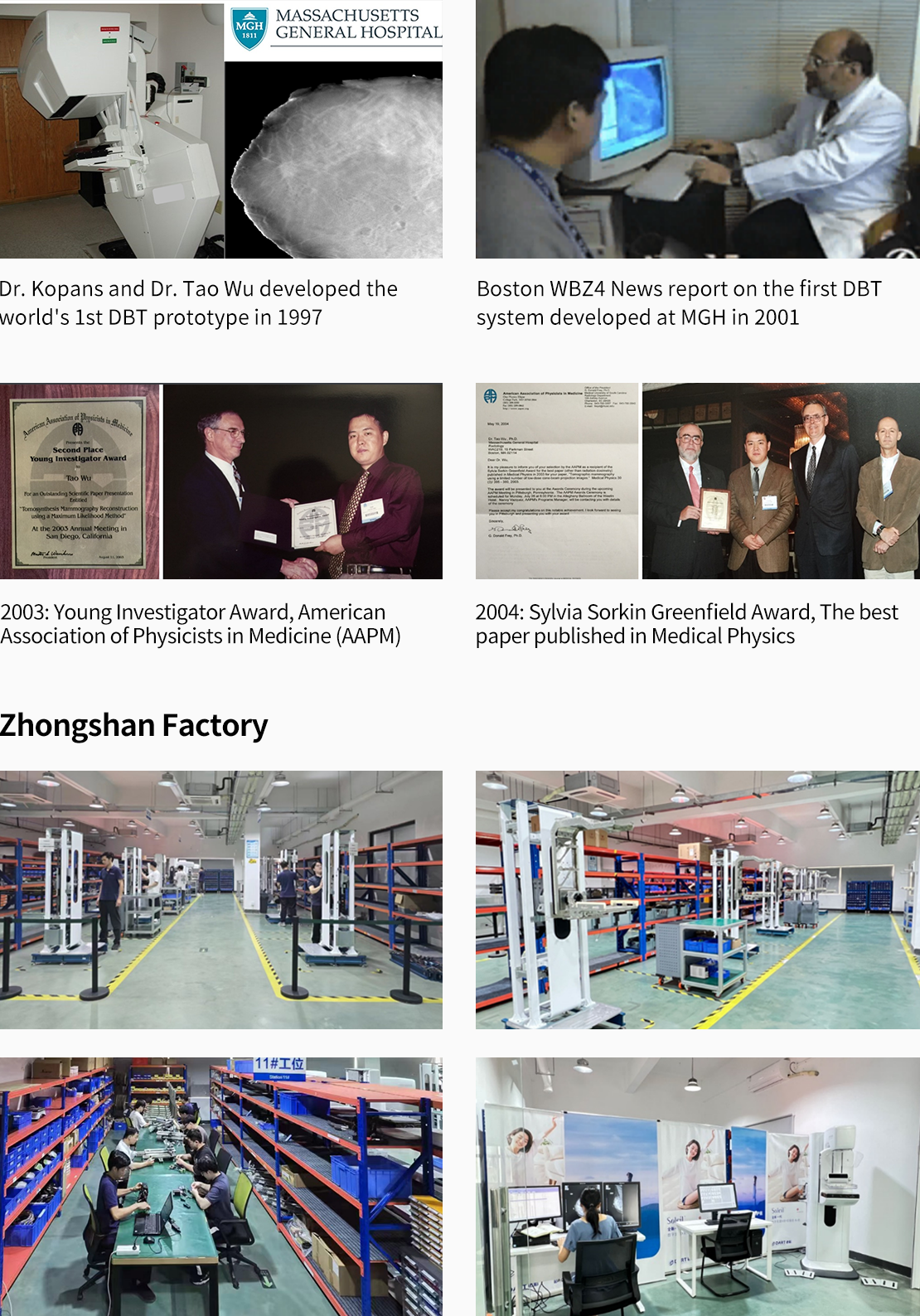
Dr. Tao Wu (1974-2025), the founder of DART Imaging, was the very pioneer of DBT technology. At Mass General Hospital, Harvard Medical School, in 1997, he developed the world's 1st DBT prototype and reconstruction algorithm, which was collected in 2015 by the Russel Museum of Medical History and Innovation of Boston for permanenet preservation and display. His work on DBT won the American Association of Physics in Medicine (AAPM) Young Investigator Award in 2003, and the Sylvia Sorkin Greenfield Award for the Best Paper published in Medical Physics in 2004. Dr. Wu then chaired the development of the 1st FDA approved DBT system in 2011, which revolutionized the landscape of breast cancer screening in the United States.
Dr. Wu started DART Imaging in Beijing, China in 2017, to further his pursuit of early detection of breast cancer for reducing cancer mortality and improving quality of life. Boasting the latest generation of DBT with much improved algorithms and streamlined ergonomics, DART Imaging had surged into a top 2 brandname of mammography in China by 2024. So far, DART has installed hundreds of units of DBT/3D and 2D digital mammography systems across China, with over 50% clients being tertiary/3A hospitals, such as the National Cancer Center, Sun Yat-Sen University Cancer Center, Army General Hospital, Peking University First Hospital, etc.
DART Imaging is now seeking to work with worldwide distributors and OEM partners to benefit the global markets with DART's cutting-edge technologies and products. With one R&D center in Beijing, two manufacturing sites in Zhongshan, Guangdong and Zhanjiang, Guangdong respectively, as well global talents and resources, DART Imaging is set to grow into a radiology imaging leader in the world.
Company Mission:
Follow evidence-based medicine, develop and promote new technologies for breast cancer screening and diagnosis.